Class Description
A complete listing of all the classes available at the center at any given time
Advanced Technique in Precious Metal Clay
Students of many disciplines (clay, polymer clay, enamels, metal) will discover interesting ways to incorporate PMC+ into their work. This one-day workshop will cover several examples of stone setting in PMC+, working with PMC paper, simple clasp making, and mold making. Materials will include 1 package of PMC+, lab-grown gems, PMC paper, and use of toolkit. Some prior PMC experience is necessary.
Instructor: Suzette O'Dell
Anticlastic Forming
In this two day workshop you will learn the basics of anticlastic raising. This process allows you to create exceptionally strong, flexible, lightweight, and organic-looking forms. A flat sheet of metal is shaped by compressing its edges and stretching the center so that the surface develops two curves at right angles to each other. A saddle is a good example of an anticlastic form. We will focus on "open", or "monoshell" forms made from single pieces of thin sheet metal, working to create striking dimensional shapes. Each student will have the opportunity to make a finished piece of jewelry that includes this process.
Though open anticlastic forms date to the middle Bronze Age, it is only recently that they have been explored in detail. This new focus has yielded some of the most interesting forms in contemporary metalworking. You do not need a great deal of metalworking experience to take this class, but some facility with the hammer is helpful. This class is however a prerequisite to taking Introduction to Decked Forms and will greatly expand the range of forms available for you to incorporate into your designs. Some forging experience helpful.
Instructor: Bill Dawson
Tool Kit available for sale $300
- – One steel mandrel
- – One plastic mallet
- – One steel embossing hammer
- – One plastic sinusoidal
- – Two steel raising hammers
- – Three steel sinusoidals
Arts and Crafts Copper for the Contemporary Northwest Artists
Learn the basics of forming copper and develop motifs that are special to you and the region in which you live. In this three-day, intensive workshop we will draw on the decorative use of copper in the Pacific Northwest, which pre-dates European contact, as well as the use of copper as a popular material in the Arts and Crafts Movement. Come be part of an ongoing exploration into the creative potential of this rich and beautiful material. Find your individual voice, special motifs, and authentic expression while exploring those of the past. You will leave this workshop with new metalworking skills, an additional vocabulary of personal images, and beautiful decorative art objects for your home. No experience necessary.
Instructor: Bill Dawson
Basic Bead and Wire Jewelry
Learn the simple tricks of working with wire to create unique gifts for the holidays and beyond! Using basic hand tools, we will explore linkage systems for making earrings and necklaces, including clasps and ear-wires, as well as learn small-scale forging to add distinctive accents to our pieces. This workshop is great for bead-stringers looking to expand their skill repertoire and add flair to their work. Materials are provided although students are welcome to bring their own beads. No soldering and no experience necessary.
Instructor: Dana Cassara
Materials Included:
- – 24g, 20g, and 16g sterling wire for two pair of earrings and a bracelet with a “s-hook” clasp.
- – Various glass beads
- – Students are welcome to bring additional beads to work with.
Beginning Fusing: Links and Clasps
This class will cover all of the basic skills you need to get started fusing with fine silver including safety and setup. Aside from learning to fuse links to create chains you will be introduced to a variety of fused clasp options, adding character to your beautiful handmade pieces. Come prepared to have a fun, successful experience working with a small butane torch and wire!
You may bring the following materials to class or purchase a material kit from us at the time of the class. The cost of this kit will be subject to market prices which will be included in your registration confirmation letter at the time of registration. If you wish to purchase a supply kit please come to class with a check or cash!
Instructor: Liz Jones
Materials List:
- – 1 oz 14 gauge Fine Silver Wire
- – 2 feet 24 gauge Fine Silver Wire
- – 1 foot 12 gauge Fine Silver Wire
- – 6 inches 22 gauge Fine Silver Wire
Beginning Jewelry Making: Total Immersion
What could be more fun than spending a week totally immersed in learning to make jewelry? Absolutely nothing! Spend an exciting five straight days doing just that! Together we will tackle the fundamentals of learning to work with precious metal: sawing, disc cutting and dapping, hammer texturing, roll printing, basic forming and finishing, as well as bezel setting stones. In this beginning silversmithing class students will make individualized jewelry pieces including a pin, pendent, ring and a simple linked project. Each night you'll go home dreaming of what to create the next day, designing in your sleep! This class is an ideal opportunity to explore a range of techniques, in a condensed time, while creating several projects!
Instructor: Dana Cassara
Materials included:
In this class you will be provided with materials to produce a copper brooch, a sterling silver pendant with a cabochon stone of your choosing, and enough silver to produce a band ring as well as linked bracelet. If you choose to work larger than the samples provided in class, there may be an additional materials fee.
Bronze Precious Metal Clay: Beginning & Intermediate
Brand new on the market, bronze precious metal clay can be rolled, molded, pressed and carved just like silver and gold clay however it is much less expensive! The final luster of bronze is ideal for creating visually warm elements to incorporate into your bead work or to create one of a kind jewelry pieces. The relatively inexpensive bronze can also be used to test run a mold or to create models for molding. After being fired in a kiln, this unique material results in a finished piece of pure metal! This comprehensive workshop, ideal for any level student will present students with numerous techniques for working with this extraordinary material. Each student will have the opportunity to complete several projects with and without stones. No experience necessary however returning students are definitely encouraged!
Instructor: Suzette O'Dell
Supply fee includes a package of PMC Bronze, PMC slip, rubber mold-making material, a variety of stones, and a tool kit to take home and use during the course of the class.
Boxes, Lockets & Hinges
Create your own keepsake in this exciting workshop geared toward investigating the fundamental aspects of hollow construction and understanding the mechanics of hinges and closures. Students will focus on the design and construction of a unique box or locket. In the process they will troubleshoot through design choices, be introduced to forming metal in a hydraulic press, and explore practical approaches to preparing and executing precision solder joints. Designed to challenge the intermediate to advanced level student, this class will stretch and reward every participant! Precious metal is not included in the cost of this workshop. The beginning series or equivalent experience is required.
Instructor: Dana Cassara or Juan Reyes
Byzantine Chain Making
In this three hour workshop students will produce their own jump-rings and learn to weave them together to create an impressive sterling silver Byzantine bracelet. You will walk out of class with a fabulous piece of jewelry and enough time before the holidays to make a few fantastic gifts! No experience necessary.
Instructor: Dana Cassara
Materials included.
Classic Chain Making Quickie: Helm's Chain and Square Maile
Just in time for mother's day! The Helm's chain is a beautiful, flat, feminine chain that always draws attention. The Square Maille is a deceptive chain because of its flexibility. It is wonderfully comfortable to wear and gets noticed because of the unusual square shape. You will leave class with two bracelets, both non-soldered link chains, easy to recreate at home. Either would be a great gift for mom or better yet treat her to the class for a great day together! No experience necessary but patience is.
Instructor: Sandra Caldwell
Materials included:
Wire for both chains and clasps are included.
Cloisonné Enameling
The vivid color and unique beauty of enameling has been prized for centuries. Cloisonné, with fine lines of precious metal delineating patterns and images, is appreciated around the world. In this class you will learn to create a suitable design, bend and apply the cloisonné wires, apply multiple layers of enamel and fuse them in the kiln, and grind and flash-fire the finished enamel, thereby creating a gemlike image of lasting beauty. No prior enameling experience is required; continuing students are welcome to refine their skills.
Cold Connections for Stone Setting
It will focus on the potential of cold connections as design choices for stone setting. Students will learn to make and integrate tabs, rivets, pierced bent-finger prongs and staples into gemstone setting for jewelry objects. Explore the use of cold connections for integrating fragile and non-traditional materials into your jewelry making. Some stones provided, but students are encouraged to bring experimental materials and objects. Intermediate level.
Instructor: Nanz Aalund
Materials provided in supply kit:
- – A 6 mm CZ
- – An 11 mm round cabochon
- – A 24 X 18 mm cabochon
- – 2" x 3" 18-gauge copper and aluminum plates
- – 3" piece of Copper tube that fits a 14-gauge wire inside
- – 1 foot 14-gauge copper wire
- – A 45 degree setting bur
- – A 14-gauge drill bit
Other materials:
All items below are available for students to use in the studio however if you have your own please feel free to bring them. Students should bring jewelers saw blades and sheet silver. Copper and brass will be available to students.
- – Riveting Hammer - can be a cross-peen or ball-peen
- – Hand Files various grits, and/or sanding sticks
- – Wire cutters, flush cutters
- – Chain, flat, and round nose pliers
- – Bench vise (small)
- – Jewelers Saw
- – Small bench block
- – Awl
- – Raw hide or Nylon mallet
- – Brass slide gauge
- – Dividers
Digital Photography for Jewelry
This extremely valuable workshop will deal with the many photographic needs facing artists and how we can take care of them ourselves. Learn how to use your digital camera to photograph jewelry and small sculpture for portfolio and advertising purposes. Lighting, set up, backgrounds and other issues critical for creating images to best promote your work in the business world will be discussed. The first two days of this three day workshop will focus on the photographic process with each student using their own camera. The final day will address post-production including creating a CD of your new images to take home and use. Each student should bring 3-4 pieces to photograph as well as a camera.
Instructor: Jim Dailing
Materials List:
Please bring a digital camera if you have one, in addition to several pieces of work to photograph.
Enameled Engravings with Cloisonné
Make your own exquisite enameled jewels while being introduced to two traditional metalworking techniques. Student will first engrave a pattern into a fine silver base, and then work a simple cloisonné pattern into transparent and opaque enamels. The effect is brilliant, and the techniques are fairly simple. Once fired, the enameled disc can be set like a cabochon or antique coin, in whatever design you choose. This workshop is appropriate for beginners, but experienced jewelry artists may find it very exciting as well!
Instructors: Bill Dawson
Enameling Basics
Enamel is a wonderful way to introduce color into your jewelry. This one-day quickie will give you a good basis for how to work with enamel and an enameling kiln. Using opaque enamels we will begin with sifting and explore stenciling, liquid enamels and sgraffito. Each student will create several components that can later be set like a cabochon or made into earrings or a pendant. No experience necessary.
Instructor: Aran Galligan
Materials Included:
Students will be provided with copper and a wide variety of enamel colors to work with. Students are welcome to bring 20g-22g fine silver sheet if they want to experiment with silver. The silver must be fine and not sterling.
Enameling Techniques for Jewelry
Enamel is a wonderful way to introduce color into your jewelry. This two-day workshop will give you a good basis for how to work with enamel. We will begin with sifting and torch firing then move onto kiln firing, stenciling, and cloisonne. Each student will create several components that can later be set like a cabochon, or made into earrings or a pendant. All levels.
Instructor: Aran Galligan
Materials:
Students will be provided with copper and a wide variety of enamel colors to work with. Students are welcome to bring 20g-22g fine silver sheet if they want to experiment with silver. The silver must be fine and not sterling.
Alternative Techniques in Enameling II
Expand on your basic enameling knowledge and experiment with alternative techniques for enameling. Working with opaque enamels we will investigate basic fold forming techniques to create interesting shapes and texture to enamel. We will also explore using tabs to make forms, as well as wire binding, and decorative techniques like sgraffito, liquid enamel, enamel threads, and colored pencils. Students will have time to create several enamel components. All levels.
Instructor: Aran Galligan
Etching Metal
See an image or pattern come to life in brass and copper through an acid etching process! This technique is excellent for creating rolling mill templates, photo transfers and embossing precious metal and paper. Physical properties of different acids and metals will be explored, resist techniques and studio safety. The end result will yield several etched plates for use in future jewelry/design projects! This workshop is appropriate for beginners, however experienced jewelry artists may find it very exciting as well.
Instructor: Jessie Wylie
Materials included:
Students will be provided with metal to etch both for immediate use and for embossing plates as well as all other necessary supplies.
Explore and Expand
Challenge yourself out of your comfort zone and move into new creative territory. Students, working as a group and individually, will participate in a series of creative "exercises" involving paper, metal, and found objects. In the afternoon class will focus on the individual needs of each participant, applying a revitalized vision to project student bring to class. There will be some assignments however it is generally hoped that each student will bring in projects they want to use to explore their fresh ideas. No soldering will be done in class. All levels.
Instructor: Micki Lippe
Material list:
Students are highly encouraged to bring current projects and or drawings for ideas to class.
Fantastic Fold Forming!
Fold forming is an exciting technique wherein sheet metal is manipulated and hammered to create fabulously textured, 3-dimensional, organic forms. This is a relatively quick process, so students will have the opportunity to create a variety of basic forms as well as explore interrupted folds, texturing fold forms, and fold forming 3-D forms. Students will cut, file, and practice annealing metal as well as develop a fundamental understanding of how to use a jeweler's hammer. This workshop is appropriate for beginners, however experienced jewelry artists will find it very exciting as well.
Instructor: Bill Dawson
Materials included.
* Copper for a variety of samples will be provided. If students wish to work in silver, 24g sheet is ideal.
Forged Forms
Learn to express yourself in metal while letting the metal express its nature through your work. This is the true art of the smith, working with the fundamental plasticity of metal, shaping it under the hammer without grinding or other stock removal. This two-day workshop is your chance to really learn to handle the hammer and how to choose the proper stake for the task. We will also cover the basics of mill forging, twist and roll wire, chisel piercing, and swedge work. No experience necessary.
Instructor: Bill Dawson
Granulation
Granulation is an ancient technique practiced some five thousand years ago by people with no modern equipment. In order to honor those who came before us, one who commits themselves to the time consuming practice of granulation, must have unlimited patience and respect for the craft. The process is repetitive and requires a great deal of skill and accuracy. During this class we will gain the skill needed for granulation. We will start with chain making to get accustomed to the fusing process and quickly move to granulation over the 5 week course. You will finish the class with some very fine granulated samples that can be used in finished pieces. This class is focused on the technique of granulation rather than on producing a finished piece. There will be a little bit of history thrown in the mix for inspiration and as always bring your imagination!
Instructor: Molly Epstein
Materials included:
Students will be provided with 22g fine silver wire to produce a bracelet length loop and loop chain, thin fine silver sheet silver to create a few granulated samples, a wooden dowel and glue for granulation.
Hand's-on History of Decorative Wire
Come learn the techniques involved in making different kinds of wire and moldings from different time periods. In addition to new skills students will take home samples including bead wire, roped molding, spiral wire, tapered wires, and wire of various cross sections such as triangular and hexagonal. Basic metal working experience helpful; no soldering experience required.
Instructor: Bill Dawson
Materials included:
Students will be provided with copper and solder for samples.
Hollow Fold Forms and Decking
Expand on your basic knowledge of fold forming with more complex patterns including wire scoring and hollow fold-forms. Fold forming can create incredibly beautiful shapes but hollow folded forms can be too flexible for practical purposes. Learn to "deck" your forms to create rigidity, turning these fantastic organic shapes into more functional vessels. Like the deck of a large ship deck, "decking" makes open forms stronger and can be used to fortify any hollow metal shape making it a very transferable skill. Some advanced soldering techniques will be demonstrated as soldering a deck onto a hollow form is no easy task. Basic fold forming and soldering skills required.
Instructor: Bill Dawson
Materials included:
Students will be provided with copper and solder for samples.
Image and Mark Making in Enamel: Surface Exploration
Emphasis in this workshop will be on creating exciting surfaces through exploration of nontraditional enameling processes. Line is an important element in composition and we will explore enamel techniques which allow us to achieve lines and images. Develop new compositions and designs in your work by learning to make a variety of lines in enamel. We will explore a range of techniques including mark making, drawing, sgrafitto, and removal. Methods for creating surfaces will include inlaying seed beads and enamel shards, dry screening and stencilling, sgrafitto, graphite, oxide and painting enamels.
Instructor: Jan Smith
Students need to bring:
- – Copper pieces: circles squares whatever you want to work on jewelry size
- – Brushes #03, 01 fine #10 flat and additional round and flat brushes
- – Flat palette knife
- – Flat piece of glass or tile for mixing on
- – Round paint tray plastic or glass, best with a lid
- – Pencils of varying hardness (2h, 2b,4b etc.) and automatic pencil with leads
- – Scribe, pin tool or needle tools (if you have various pointy tools with different thickness bring them)
- – Calligrapher's pen with tips (quill pen)
Materials included:
- – Glass etch with plastic container
- – Stones or 3m brushes
- – Glass brush
- – Copper bright
- – Green scotch pads
- – Kiln gloves, firing screen, firing forks
- – Sifters. One 150 mesh one 200 mesh
- – Klyr fire
- – Scrap magazines for sifting
- – Set of underglaze pencils
- – Set of underglaze paints
- – Misc. China paints
- – P3 liquid
- – #5 thinning oil
- – Lavender oil
- – Set of micron marker pens (UW book store sells them)
- – Various enamel colors
NOTE:
A sample kit is available from Thompson Enamel, www.thompsonenamel.com. Students may want to purchase the sample kit for a wider variety of colors and to have enamels to work with after class.
Intermediate Jewelry Making: Total Immersion Part Two
What could be more fun than making jewelry for an entire week? Nothing! Join me on this five day journey aimed at increasing your confidence and knowledge at the jeweler?s bench. We will focus heavily on construction and soldering tricks as well as finishing techniques to create desired surfaces. A variety of stone setting options will be covered including tube, prongs, pedestal settings and captured settings. Basic hydraulic press forming for creating multiples and preserving textures, simple hinges and clasp systems will also be presented. Students may choose to work through the design and completion of a ?complex? piece of jewelry or create samples of each technique over the course of the week.
Instructor: Dana Cassara
Materials list:
Projects will be variable. Students may chose to work with a variety materials. Below are suggestions for the range you may want to bring to class. Silver and a variety of stones are available in the studio for sale.
- - Silver sheet metal, 24-20 gauge
- - Various sizes of wire 14-20 gauge
- - Silver Tubing
- - Stones or other found objects
Materials included:
- - Copper/brass sheet and wire for samples
- - Copper tubing
- - Solder, flux, sandpaper
- - Hand tools and studio equipment
- - Three 3mm faceted czs
Prerequisite:
Total Immersion: Beginning Jewelry Making or The Beginner's Series: Introduction to silversmithing + Rings for Beginner's + Nifty Links and Hollow Forms or comparable beginning jewelry making class.
Intermediate Stone Setting
This 6 week hands-on course will cover the basics of several stone setting techniques beyond a basic bezel. Expand your repertoire of stone setting skills with pedestal settings, prong construction and setting, tube, post, & bar setting for multiple stones as well flush, capture sets, and a few unique settings for unusual shapes & found objects. Finishing tips for bezels as well as tools and equipment that make setting easier and provide a professional finish, will be covered in this comprehensive and valuable class!
Instructor: Jennifer Stenhouse
Materials List:
Bring a selection of sterling wire in round, half round and square, and 20g sheet, cabochons, faceted stones, cz's, shells and fascinating found objects for practice!
Introduction to Classic Chain Making
In this class you will learn two types of chain, one woven and one made with links, neither of which require soldering. The woven chain is the Viking Knit. The easiest of the woven chains, Viking Knit is built around a mandrel and looks quite different when it is being made than the finished product. This is probably the most commonly seen woven chain.
The Byzantine is the link chain that you will learn. This may be the oldest of the link chains. It was originally called the King?s Chain because only kings could wear it. This is a classic and it lends itself to variations once you know the basic chain.
The class will meet twice, two weeks apart for five hours each day. You will leave the class with two completed pieces of jewelry, one necklace and one bracelet. Materials are included in the cost of the class.
Instructor: Sandra Caldwell
Materials provided:
- – .6oz 24gauge round wire, dead soft
- – 1oz 18 gauge round wire, half hard
Intro to Chasing and Repoussé
The term repoussé refers to punching sheet metal from the backside to create raised areas on the front side in low to high relief. Chasing refers to detailing the front side of the piece using steel, wood, plastic or brass tools to texture, stamp, undercut and refine the surface. Since the Bronze Age, these techniques have been used to create relief from sheet metal and to add refined and expressive detail to the front of the sheet, the outside of a vessel or container and to cast metal objects. This class will introduce students to chasing and repousse in pitch. Techniques such as lining, punching, undercutting and texturing will be covered. Students will be able to complete a simple piece and will also make at least one tool as basic cold worked tool making will be covered. All levels.
Instructor: Megan Corwin
Materials included:
Copper for producing samples will be provided as well as pitch bowls and all other tools.
Supply fee includes:
- – Tool steel to make chasing tools to take home
- – Other misc. materials to work with
Tool kits will be available for purchase.
Tool kits include shallow cast iron chasing "bowl" filled with NW pitchwork medium pitch, chasing hammer, five chasing tools and a sand bag hand made by Bill Dawson. Current price (8/10) $135.
Introduction to Chasing and Repousse II
The term repouss? refers to punching sheet metal from the backside to create raised areas on the front side in low to high relief. Chasing refers to detailing the front side of the piece using steel, wood, plastic or brass tools to texture, stamp, undercut and refine the surface. Since the Bronze Age, these techniques have been used to create relief from sheet metal and to add refined and expressive detail to the front of the sheet, the outside of a vessel or container and to cast metal objects. This class will introduce the student to chasing and repousse in pitch, a tar like substance that grips the metal and gives wherever the metal is hammered. Students will also learn to use Masonite or wood dies and hydraulic press plastic dies to facilitate repousse for making multiple forms that can be chased. No metalworking experience is necessary to take this class but beginning to intermediate level students are encouraged.
Instructor: Megan Corwin
Materials included:
Copper for producing samples will be provided as well as pitch bowls and all other tools.
Supply fee includes:
- – Tool steel to make chasing tools to take home
- – Other misc. materials to work with
Tool kits will be available for purchase.
Tool kits include shallow cast iron chasing "bowl" filled with NW pitchwork medium pitch, chasing hammer, five chasing tools and a sand bag hand made by Bill Dawson. Current price (8/10) $135.
Introduction to Decked Forms: Creating Rigidity
When you apply a cover or "decking" to an anticlastic form, a hollow form, or even a fold form, something interesting happens. In all cases, the form becomes rigid. Un-decked, these forms may be manipulated, usually by twisting, so that their curves change to create beautiful and sometimes useful shapes. Once decked, they no longer twist, and hold these new shapes with a remarkable toughness.
In this class you will learn to make patterns and to apply decking to a variety of forms to create beautiful and in some cases functional objects. You need not be an expert metalsmith, but you do need to know how to solder, sear, and file metals. You will need to have already taken the Introduction to Anticlastic Forming workshop, as we will be making a number of simple anticlastic forms to be decked. If you are familiar with fold forming, that is also a plus. You will be amazed at the diversity of forms you are able to create using this process, and you will marvel at their lightness and toughness.
Instructor: Bill Dawson
Introduction to Designing and Silversmithing Jewelry
First in the Beginner's Series, this workshop is an ideal introduction to the fundamental aspects of silversmithing. Explore jewelry design while learning to saw, file, texture, and form nonferrous metals like copper, brass and silver. Students will develop a basic understanding of soldering and setting stones in bezels and will complete two pieces of jewelry. Acquire a real taste for working in metal while gaining the foundation necessary to pursue the art of silversmithing. No experience necessary.
Instructor: Dana Cassara
Materials included:
In this class you will be provided with materials to produce a copper brooch and a sterling silver pendant with a cabochon stone of your choosing. If you choose to work larger than the samples provided in class, there may be an additional materials fee.
Introduction to Engraving for Art Metalsmiths
Mastering engraving is a lifetime endeavor, but like most such arts the basics can be learned in a fairly short time, and after that repetition and careful practice increase skill. There is a lot of embellishment that can be done with relatively little engraving experience, and engraving can add a great deal of interest to your designs. In this two-day workshop we will start with tool setup and layout and then explore hand engraving, wriggle cut, and hammer driven engraving. We will work with a variety of methods for holding the work piece and a variety of schemes for pattern transfer. Lettering, gunmetal engraving, and inlay work will not be covered. Each student will take home a basic set of gravers fitted to their own hands and a whole new range of options for decorating their designs. Some familiarity with tool sharpening is helpful as we will be doing a lot of that!
Instructor: Bill Dawson
It Ain't Just a Drill: Getting the Most From Your Flexible Shaft
The flexible shaft machine is one of the most versatile and important tools on the jeweler's and metalsmith's workbench. Yet many people use it for only a few basic jobs.Gain a deeper understanding of this marvelous tool and expand your vocabulary of flexible shaft techniques and applications. This one day demonstration-style workshop will cover the basic machine itself and discuss the use of burrs, bits, grinding, shaping, finishing and polishing aids and various hand pieces. Everything from Abrasives to Zam! Expect some eye opening innovative tricks as well.
Instructor: Andy Cooperman
Materials Included.
* Tool kits may be purchased at the end of class. The cost for this kit will be subject to market prices which will be included in your registration confirmation letter at the time of registration. If you wish to purchase a kit please come to class with a check or cash!
Keum-Boo: Attached Gold
Add the luster of gold to your silver fabrications! In this workshop students will make a pair of PMC+ earrings and learn to apply 24K gold foil to them. The result is dramatic, creating rich color and beautiful textural possibilities. Kuem-Boo (pronounced kum-boo) literally means "attached gold." Kuem-Boo is an ancient Korean design technique. However the technique of applying 24K gold to silver is widely used in various cultures. Students may bring finished PMC pieces to class for applying the Keum-boo process (mostly flat surfaces, no hollow forms). Basic PMC experience required.
Instructor: Suzette O’Dell
Materials List:
- – Fine tip tweezers (5 inches or longer)
- – Wooden kitchen skewer (or chop stick)
- – Leather garden gloves that actually fit and in which you can work Craft cutters (spiral, star, etc.)
- – Sharp scissors
Kiln Fire Enameling Basics
Curious about enameling? Get a taste for glass on metal in this fast paced one day class. Using a kiln for more control over your results, learn how to apply opaque enamels on copper. Try sifting as well as wet laying enamel. Experiment with stencils and sgraffito to create pattern or design. Depending on personal style, enjoy results that are more controlled or allow for the interaction of enamels and kiln to surprise and delight. Finished pieces can be completed with simple findings or with settings constructed afterward. No experience necessary.
Instructor: Linnie Kendrick
Materials included:
Students will be provided with copper and a wide variety of enamel colors to work with. Students are welcome to bring 20g-22g fine silver sheet if they want to experiment with silver. The silver must be fine and not sterling.
Linked and Woven Decorative Chains (Helms Chain and Viking Knit)
As popular today as in the times of Emperors, linked and woven chains are one of the oldest and most popular forms of jewelry on the planet! These chain patterns, created from wire, are relatively simple yet very satisfying to create. Explore the relaxing and rewarding art in this three night class designed to teach students two chain patterns as well as the basic techniques of chain making. This class will focus on one linked pattern, Helm Chain and one knitted, Viking Knit. Helm Chain is a lovely flat-laying pattern reminiscent of lace, feminine and light weight. Viking knit is a chain woven from delicate silver wire using only a wooden dowel! Basic "S" hook clasp will be taught so students can expect to leave class with two completed projects. Offering this class over three weeks will give students the opportunity to practice their chains at home and return the following week with whatever questions may arise! This class is suitable for beginning to Intermediate level students.
Instructor: Sandra Caldwell
Loop and Loop Chain
Among the oldest decorative linked chains known, loop and loop chains are made from multiple fine-gauge, fused links carefully woven together to create a supple, strong, elegant chain. Students will learn to make and fuse very delicate wire rings, and create several loop and loop patterns including single, double, and quadruple loop and loop! Students then will have the opportunity to design and execute a simple terminal to complete a fine piece of jewelry. Materials to complete one 18? single loop and loop with a terminal as well as a sample of the other patterns demonstrated will be provided in the cost of the class. Basic metal working skills helpful.
Instructor: Molly Epstein
Low Tech Enameling
Using a torch and a few simple tools, students will learn the basics of enameling in this exciting three-hour workshop. Students will explore the potential of this fascinating medium, sample a variety of colors, and work with flat and 3-dimensional forms. This is a great opportunity to learn how to add vibrant color to your copper and fine silver jewelry. Moderate comfort with a jeweler's torch is required.
Instructor: Allan Thorne
Materials included:
Copper sheet and an exciting variety of enamel colors will be provided, as well as an appropriate protective face mask for each student.
Making Metal Forms: Techniques in Hollowware
Direct hammer forming is the most versatile approach to creating three dimensional objects in metal. The truly special quality of metal is its remarkable plasticity, meaning it can take virtually any shape and remain strong. The metal artist with skill and knowledge can turn a flat sheet of metal into a teapot or goblet or a beautiful bracelet. In this four-day intensive workshop we will explore some of the many techniques for working with the plasticity of metal to create three-dimensional forms. Techniques will include sinking, various forms of raising, hammer forging, bouging and plannishing, upsetting and other edge treatments. No formal metalworking experience is required, but some stamina and facility with a hammer is helpful.
Instructor: Bill Dawson
Marketing a Production Line
Now that you are making jewelry, how do you sell it? This class will cover various avenues available for selling. Learn the basics behind selling wholesale on both a consignment and buy-outright basis to venues ranging from small boutiques to high-end galleries. Learn to promote your work through gift shows and sales reps. Learn also about selling retail at craft markets, fairs, and online. In addition, we will discuss creating a line of work, pricing it, and marketing it. Students are asked to bring their own jewelry to use as a springboard for discussion as well as a notebook and pen to take notes. Class will be a mix of instruction, discussion, and practical activities.
Instructor: Chuck Domitrovich
Mentored Independent Study
Join the mentored independent study group! With instructor guidance, this ongoing workshop allows independent study students to develop and execute a wide range of projects, growing their skills in a consistent and supportive environment. Demos for this class are tailored specifically to current projects, (whatever they may be) and so vary greatly. Class time will also be used to plan projects from beginning to end. This is a great opportunity to tackle a challenging project that you may need a little support to execute! Students are expected to provide consumable materials. Instructor permission is required to participate. Formerly offered on a drop-in basis, this class now requires pre-registration. Each session is five weeks long.
Instructors: Juan Reyes and Dana Cassara
Materials List:
- Students are required to bring their own consumable materials such as metal, saw blades, drill bits, sandpaper, and solder. Flux for soldering is provided.
Metal Surface Treatment
Transforming images from 2-D drawings or photographs to metal is the goal of this class. The surface of metal will be manipulated and enhanced using the rolling mill and other tools. Construction techniques, roller printing, fusing, gilding, overlay, inlay and patinas will be covered. Students will texture metal to create patterns and practice soldering to strengthen skills, adding to their individual artistic growth.
Instructor: Jane Martin
Needle Felting Jewelry Forms
Want to make large jewelry with a distinctive look that is practically weightless? Felting is an excellent way to do it. Spend the weekend learning to shape a ball of soft wool into an amazing cuff bracelet or a 3-dimensional object using a felting needle. We will start by making felted beads, learning how to make a variety of forms. From there we will create a bigger piece, adding sculptural details and/or patterns. You will probably poke your finger a few times but you will have lots of fun and discover a new exciting medium. Instructor: Cynthia Toops
Materials included:
- - felting needles
- - foam
- - bracelet form
- - roving
Nifty Links and Hollow Silver Forms for Jewelry
Vastly improve your soldering skills while focusing on small hollow forms and linked elements. In this installment of the Beginner's series, students will be introduced to roll-printing, a technique for creating elaborate and organic textures in metal and a terrific way to create unique beads. They will also learn some handy tricks for designing and soldering custom linked chains. Students will focus on the construction of a linked bracelet. However, you can expand to a neckpiece if time permits. No experience necessary.
Instructor: Dana Cassara
Materials included:
In this class you will be provided with materials to produce copper samples as well as a sterling linked bracelet and a couple sterling silver hollow beads or a linked necklace. If you choose to work larger than the samples provided in class, there may be an additional materials fee.
Painting Enamels
The use of painting enamels began in medieval France, which is why this technique is sometimes referred to as "Limoges" enameling. In this workshop, you will learn a straightforward way to add fine details to your enamels. Painting enamels are mixed with lavender oil and applied to a previously enameled surface. You will be provided with two enameled blanks, and you will complete at least one small piece that can be worn as a pendant. Both beginning and experienced enamellists will enjoy this unique class.
Precious Metal Clay+: Beginning and Intermediate Levels
PMC+ is silver clay that can be rolled and molded, pressed and carved. After being fired in a kiln, this dream material results in pure silver pieces! This comprehensive workshop presents students with numerous fundamental techniques for working with PMC+. Each student will have the opportunity to complete several projects, including a pair of earrings; a pin; two pendants, one with a stone set into it; and a hollow bead. Instruction also includes finishing techniques. No experience necessary. Returning students welcome.
Instructor: Suzette O’Dell
Polymer Bracelets, Bangles and Beads
Explore a variety of polymer clay techniques while creating jewelry and/or beads. Learn how to make sculptural forms, beads and other dangly elements. Experiment with drawing, onlaying, carving, cane work and thin sheet elements. The more ambitious can create bracelets and bangles while others can work on beads to create a sampler necklace.
Instructor: Cynthia Toops
Materials list:
A wide variety of polymer clay colors to begin the first night of class will be provided. Once students choose a direction for their projects students may need to purchase additional clay. Polymer clay is readily available and inexpensive.
Polymer Mosaics in Jewelry
Have you tried working with polymer clay? Using this 20th century material we will create incredible micromosaics to use as gems in pendants, brooches and/or rings. In this class we will cover mixing colors, making the mosaic elements, setting and finishing the jewelry or framed piece. Metalsmiths can bring a completed bezel or piece with a bezel to work with. No previous polymer clay or metal working experience is necessary for this exciting workshop.
Instructor: Cynthia Toops
Precious Metal Clay Basics
Precious metal clay, known as PMC, can be rolled and molded, pressed and carved just like clay. After being fired in a kiln, the finished piece is pure metal! This quick one day class is designed to give you a taste of what can be done with this marvelous material. Students will have the opportunity to construct and fire a couple of pieces gaining the foundation to pursue the material further in the future. If you are inspired, continue exploring in the workshop, PMC + and Bronze Metal Clay! which starts up the following week on Thursday nights, open to beginners like you!
Instructor: Suz O’Dell
Supply fee includes a package of PMC+, PMC slip, rubber mold-making material, a variety of stones, and a tool kit to take home and use during the course of the class.
Press, Push, Puff!
Add dimension quickly and consistently to your metalwork by using a hydraulic press. Ideal for making forms with patterned metal, building a production line, beginning a chasing project and much more! This is a fun and easy way to add texture, unique shapes and dimension to your art work! You will learn how to make a die using various materials. We will experiment with folds, cuts, and holes while using tons of pressure to form our metal. Some experience with metal recommended.
Instructor: Jessie Wylie
Production Techniques and Tips for Jewelers New!
This class will address the unique challenges inherent in designing and creating a line of production jewelry. We will focus largely on developing the mindset necessary to think in terms of production including design approaches, execution strategies, outsourcing, and choosing the right tool for the job. Class will include some demo but will focus on presenting new perspectives, making it easier and cheaper to produce and sell your work. Students should bring in samples of pieces they are interested in pursuing as a full jewelry line. Part of class time will be used to brainstorm ways of cutting production time and costs on each student's work so that it can be produced in the quantities needed to sustain a production line.
Instructor: Chuck Domitrovich
Reuse, Recycle, Renew!
Give your grandmother's costume jewelry a facelift. Melt down that ring you bought when you wee ten traveling through the southwest with your parents. Take that great stone out of that ugly piece of jewelry and reuse it in something you make yourself. If it is silver or gold you can melt it down creating new metal to work with. If not, explore ways to incorporate old components into new work. Create new jewelry from your old jewelry in this weekend workshop designed to teach some basic casting and cold connections skills. This class will focus on identifying reusable materials including various metals, glass, resin and stones and as well as how to problem solve taking jewelry apart and putting it back together. Basic soldering and sawing skills required.
Instructor: Bill Dawson
Materials List:
- – Bring old jewelry both costume and precious metal, with and without stones.
- – Silver solder: hard, medium and easy (available to purchase in the studio)
- – Silver sheet and wire, various sizes (available to purchase in the studio)
Rings for Beginners
This Beginner's Series class focuses on the basic construction of fabricated rings, both with and without stones. Each student constructs a simple band ring and a ring with a bezel-set stone. In the process of designing and constructing these rings, students increase their soldering skills and become familiar with some of the 3-dimensional possibilities of metal. No experience necessary.
Instructor: Dana Cassara
Materials List:
In this class you will be provided with materials to produce two sterling silver rings: a band ring as well as a ring with cabochon stone of your choosing. If you choose to work larger than the samples provided in class, there may be an additional materials fee.
Rivets, Tabs and Silver Screws
Come learn a variety of techniques for joining parts securely, without the use of heat or solder. This workshop will cover a wide range of mechanical joints that can be achieved with simple tools. We will be working with simple headed rivets, roves, blind rivets, tube rivets, coiled joints, mini screws, and much more. There will be practice samples, as well as the option for a finished piece of jewelry to take home. We will work with brass, copper, silver, and horn or antler, learning how to determine the appropriate sort of cold joint for the materials at hand. No experience necessary although basic metal working skills helpful.
Instructor: Bill Dawson
Materials included:
Copper and brass is included for making samples, as well as a variety of rivet-making components. Depending upon the season, Bill often provides a delicious snack of heirloom home-grown vegetables and fruit, as well as lavender goat cheese, among other delightful treats. Not to be missed!
Silver Reticulation
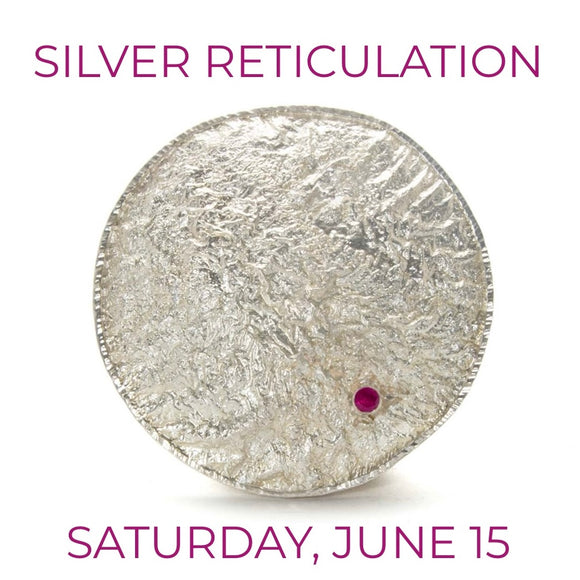
First developed in Russia by Czarist jewelers such as Faberge, reticulated silver will add exciting and unique 3-dimensional texture to your work. By carefully preparing the surface of the metal and heating with a focused yet delicate torch, this specialized technique reveals a mysterious lunar-like landscape within every piece of silver! No experience necessary although basic metalworking skills helpful.
Instructor: Juan Reyes
Materials included:
Students will be provided with one ounce of reticulating silver.
Silver Spoons
Create a one of-a-kind serving, baby, table, or commemorative silver spoon, it's not as complicated as you might think! In this weekend workshop students will have the opportunity to choose among several techniques for creating a personalized silver spoon. This is an excellent introduction to true silversmithing without the time and expense of raising a large vessel. No jewelry experience is necessary, however basic metal working skills will be helpful. Spoons are a great gift idea and a marvelous opportunity to explore silver as something beyond jewelry.
Instructor: Bill Dawson
Materials List:
If you choose to bring your own materials to this class, supply recommendations are as follows: For a one piece forged to shape spoon: a slab of sterling about 1"x4"x10ga. For an all sheet-metal spoon of the Celtic sort: about 2"x4"x18ga. For one of the fabricated varieties, (spoon bowl with slender handle): 1 1/2"x2"x18ga, and 5" of 4 or 6ga square bar. For a baby spoon: 1"x 1"x18ga, and 4" or so of 8 or 10ga wire.
Silver Tableware
Create your own one-of-a-kind tableware; it's not as complicated as you might think! In this workshop, students will have the opportunity to choose from among several projects, including spoons, forks, and napkin rings. This is a fine introduction to silversmithing, without the time and expense of raising a large vessel. We will be working in copper, making trial designs, with the option to execute successful designs in silver. This is a great gift idea and an excellent opportunity to explore silver as something other than jewelry. See materials list or contact the instructor if you wish to work in silver. No jewelry experience is necessary, but basic metalworking skills are helpful.
Instructor: Bill Dawson
Silversmithing and Jewelry Design: Introduction Workshop
First in the Beginner's Series, this workshop is an ideal introduction to the fundamental aspects of silversmithing. Explore jewelry design while learning to saw, file, texture, and form nonferrous metals. Students develop a basic understanding of soldering and setting stones in bezels and will complete two pieces of jewelry. Acquire a real taste for working in metal while gaining the foundation necessary to pursue the art of silversmithing. No experience necessary.
Instructor: Dana Cassara
Skill Advancement for Jewelers
Make this workshop an exploration of pushing your jewelry making skills to the next level. Sequencing of multi-layered projects for greater refinement of craftsmanship, planning jewelry designs for linear work progression and incorporating use of gold accents is explored. Manufacturing techniques for cleaner final results, pre-polishing, production options, and finishing tips will be presented. Overlay techniques, edging, piercing, and beginning filigree projects can be made in this class. Intermediate level.
Instructor: Nanz Aalund
Materials included:
- – Instructional handouts
- – Students will be encouraged to bring projects to class
Other materials:
All items below are available for students to use in the studio however if you have your own please feel free to bring them. Students should bring jewelers saw blades and sheet silver. Copper and brass will be available to students.
- – Riveting Hammer - can be a cross-peen or ball-peen
- – Hand Files various grits, and/or sanding sticks
- – Wire cutters, flush cutters
- – Chain, flat, and round nose pliers
- – Bench vise (small)
- – Jewelers Saw
- – Small bench block
- – Awl
- – Raw hide or Nylon mallet
- – Brass slide gauge
- – Dividers
Skin Deep: Surface Treatments for Jewelers
In this three-day intensive workshop students will learn a variety of techniques to enhance the surface of metal for jewelry applications. Some basic tool making along with processes of hammering, torch-texturing, fusing, stamping, punching, silver reticulation, patinas, color applications, and the preparation, tools, and materials used to achieve them, will allow participants to develop a new visual vocabulary for jewelry and metal work. We'll learn a bunch of bench tricks and assorted construction methods to manipulate metal and other material while creating quick and effective results. All levels.
Instructor: Ken Bova
Materials List:
- Materials to Bring
- – Twist drill bits numbers 51, 55, & 60
- – Jeweler's saw and blades (# 2/0)
- – Small chasing hammer
- – Tweezers
- – Pair of Straight cut (not curved) toenail clippers.
- – 6 inch Straight edge (steel ruler or plastic),
- – Several small cheap watercolor brushes (e.g. camel hair)
- – one piece 2x2 inches of 20ga. sterling sheet
- – foot of 16ga. sterling wire
- – any bits of scrap sterling or sterling silver wire on hand
- – several prismacolor pencils in your favorite colors
- – A notebook and pen/pencil for
- – piece of old flannel or a buffing/polishing cloth (rouge, "sunshine")
- Materials Included
- – 6 x 12 inch sheet of 20ga. copper cut into 2x2 inch pieces (18 total)
- – sheet of 320 grit emery paper
- – sheet of 400 grit emery paper
- – steel wool (#4/0, i.e. 0000)
- – 3 or 4, FORTY PENNY (40D) Nails
- – WAXED dental floss
Slump Busters!
This is a design class for students that have some technical skills they would like to challenge. Each class project is designed to get the creative juices flowing, and be able to take back to the workbench for exploration and solutions appropriate to the individuals working level to help break the artist slump. Students will work with a variety of materials in a low tech, fast paced way to inspire ideas and designs. A notebook for drawing and note taking, color pencils and pens, some scrap metal, found objects, and an open mind are needed to get the most out of the class. Brainstorming and critique will be used to propel the class. So come prepared to discuss and share your ideas! Bring your tools, failed bits and pieces, and scrap to play!
Instructor: Jennifer Stenhouse
Small Scale Gravity Casting
Learn the fundamentals of casting by exploring the exciting and ancient techniques of melting metal and pouring it into molds without a centrifugal setup. This weekend workshop will cover carving a mold and casting into tufa stone, a light-weight sandstone, and creating quick molds in cuttle bone, a material easily found at any pet store! Students will cast into other organic material as well as create a mold in sand, an ancient form of producing a copy of another piece. Rudimentary alloying will be discussed as well as pouring an ingot, finishing techniques and safety. Bring your silver scraps if you have some! No experience necessary.
Instructor: Juan Reyes
Materials included:
Materials will include tufa stone for one mold (which you can take for future use), cuttlebone for one to two molds, and one ounce of sterling scrap to cast. Extra silver scrap will be available for purchase. Students are welcome to bring additional sterling or fine silver scrap from their own supply. Scrap must be solder free.
Soldering Basics
Whether you've had a soldering class, attempted to learn from a book, or never even tried, if you are looking to learn to silver-solder or just get better at it, this class is for you. Detailed demonstration will be presented followed by lots of hands-on time at the soldering table. Students will be shown a variety of soldering projects and set-ups and have the opportunity to create several solder samples. We will discuss different torches including acetylene/air, butane, and propane/oxygen, as well as safety concerns. No experience necessary.
Instructor: Dana Cassara
Materials included:
Metal, solder, and flux to make solder samples will be provided.
Special Projects in PMC+
Take the skills you've learned and build on them in this workshop designed to explore the remarkable possibilities of Precious Metal Clay+. This intermediate to advanced level class will focus on specific student projects. Students should come to class prepared with design ideas. Advanced techniques for working with PMC+ will be demoed each class based on student projects. Student will have the opportunity to complete several projects. Some experience necessary.
Instructor: Suz O'Dell
Materials List:
Students will want to bring whatever materials they want to use in class or students can make arrangements before class with the instructor and she will order and bring what you need.
Studio Maintenance
Learn how to repair, clean, maintain and organize the tools and equipment in a studio of your own while participating in Studio Maintain Hours at the Metal Crafting Center. This excellent opportunity will be guided by Bill Dawson twice a month in conjunction with Open Studio Hours. Projects will be based on current studio needs and may include everything from mixing pickle, to cleaning soldering tweezers, refinishing hammers, creating new tools and building a new exhaust system! Join us once or every month! Students must complete necessary paperwork to participate in Open Studio.
Instructor: Bill Dawson.
Surface-Setting Faceted Stones
Embellish any simple piece of jewelry with a spot of sparkle and color! This two-day workshop will involve lectures, demonstrations, and hands-on time exploring the possibilities in surface-setting faceted stones. We will cover flush setting, bead, pave, and channel setting. We will also spend time looking at different cuts and working qualities of stones that should be considered during the setting process. This is an intermediate-to-advanced level workshop.
Instructor: Jim Dialing
Materials List:
- – You will need some thick metal to practice setting stones into. Ideally this could be a band ring at least 2mm thick and 4-5mm wide. You also might make a band from low dome or half round and experiment with working on a rounded surface but be sure it is at lease 2mm thick, to accommodate the stone thickness. If you don't have time to make a band a 1" flat piece of 14 gage sheet silver will work.
- – Additional magnification is advised!
- – Stones, burs and drill bits will be provided.
Tablet Weaving With Metal
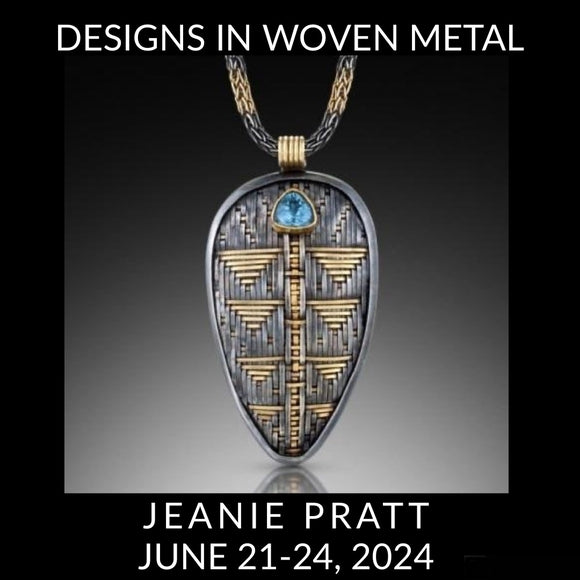
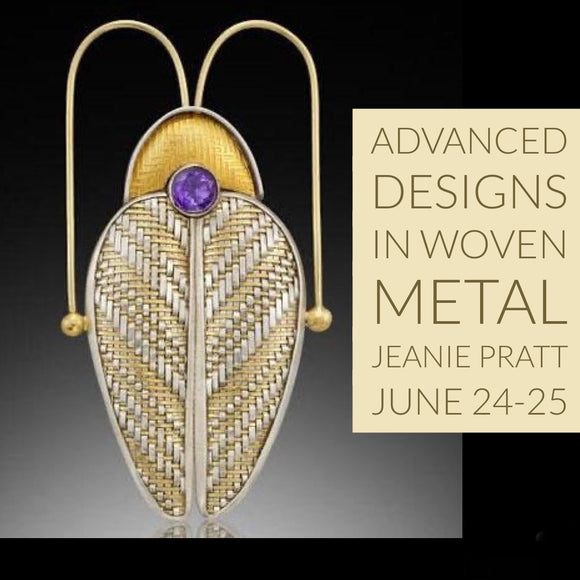
Tablet weaving is an ancient textile technique that is only now being applied to metals. It can be used to create remarkably tough and flexible woven wire bands, which may be plain or elaborately patterned. In addition to instruction, each student will receive materials that include wire for one weaving project, a frame loom, and a set of tablet weaving cards so you'll be able to set up shop as soon as you get home! In this exciting class, we will go all the way from designing a simple woven pattern and setting up the loom to the actual weaving. No experience necessary.
Instructor: Bill Dawson
Supply fee includes thin gage fine silver wire and copper wire to complete a woven bracelet as well as a loom and weaving cards to take home.
Tailor-Make a Decorative Stamp
Add distinction to your design repertoire with an individualized mark for your metalwork. It is simpler than you might think! Learning to custom-make steel tools is a priceless skill and creating a personalized decorative punch is a great first project. Take this opportunity to design your own makers-mark or simply create a unique texturing tool. Making a punch or two will give you the basic knowledge and freedom to create a range of new designs and tools to work with in the future. All levels. Instructor: Bill Dawson.
Materials included:
Steel for making two punches.
The Big Ring
Hollow rings can be big, bold, and strong while at the same time maintaining a relatively light weight. Explore and learn the ancient techniques used to design and build such a ring. In this one-day workshop, designed for intermediate students, you will learn some simple tricks in the process and can expect to increase your understanding of jewelry fabrication in general. Students must be comfortable with a jeweler's saw, file, torch, and basic soldering, and of course must like big rings!
Instructor: Juan Reyes
Materials List:
Students will want to bring, approximately #4/0 saw blades, hard, medium and easy silver solder, 24 - 26g sterling, (at least a 2"x 4" piece) and whatever else they might want to incorporate into the ring like a stone and some bezel wire.
The Deliberate Studio: Build a Great Home Studio!
Build the studio you need with the resources you have! You don't have to settle for dim, uncomfortable, and unsafe working conditions just to work at home! You don't have to risk your health for your craft! Metalsmiths often make do with these problems when they're starting out because they don't understand the risks and believe they can't afford more. Come learn otherwise! This three-hour workshop is designed as a primer for establishing a safe and productive metal-work environment on a minimal budget. We will discuss the basics of proper ventilation and dust abatement, lighting, ergonomics, noise issues, and tool gathering. Options will be proposed to solve any studio issue on any budget.
Instructor: Travis Conn
The Many Facets of Stones
Do you find yourself a little confounded at the gem shows, wondering how to determine quality and value? Do you just love stones and want to understand more about them?! Unravel some of the mystery by bringing your questions to a professional. This workshop will examine many of the issues and qualities you should understand when you begin to buy gem stones for your jewelry, as well how to communicate to your clients when you sell them. Fresh back from the Tucson gem and mineral show, Jim will no doubt be packing some beautiful gems himself!
Instructor: Jim Dailing
Tool Making
In this money-saving workshop, students will make several simple tools and gain the skills to create and customize a range of tools for the jewelry shop. We will cover the shaping, hardening, and finishing of steel tools, as well as tool design and the making of nonferrous tools. Learning these skills provides the jeweler with a whole new range of options, allowing him or her to create or alter tools to suit the task at hand. Remember, you do not have to do without the tool you need! It is recommended that students bring aprons, bandanas, hair ties, and wear leather shoes. Students may also bring old nail sets, old toothbrushes or plastic cutting boards, small scraps of tool steel, and scraps of hardwood. No experience necessary although basic metalworking skills helpful.
Instructor: Bill Dawson
– Supply fee includes steel rod for making several tools.
– It is recommended that students bring aprons, bandanas, hair ties, and wear leather shoes. Students may also bring old nail sets, old toothbrushes or plastic cutting boards, small scraps of tool steel, and scraps of hardwood.
Tool Making for Enamelists
Fine art enamel work requires specialized tools and many are simple enough to make your self! Learn to make the tools you need for small scale cloisonn?, including quill scoops, probes, layout panes spatulas and trivets. We will also make fine silver cloisonn? wire, and base plates, which will be available for the cost of the metal.
Instructor: Bill Dawson
Materials List:
Materials to make tools will be included in the class fee. * The cost for the cloisonné wire and base plates will be subject to market prices at the time of class. The price of these supplies will be included in your registration confirmation letter at the time of registration. If you wish to purchase cloisonné wire and base plates please come to class with a check or cash!
Unique Settings for Faceted Stones and Found Objects
Break out of the ordinary bezel and simple settings for cabochons and learn to create uncommon holding systems for cabochons, faceted stones, enamels and other found objects. Using different shapes of wire and sheet metal students will learn to construct settings that can be used for all kinds of wearable art. The focus will be on soldering and construction tricks that help hold the work together while creating settings. Also, proper use of burs and the introduction of special stone setting tools will be demonstrated. The use of unusual stones, enamels and found objects is highly encouraged. Basic metal working experience necessary.
Instructor: Jennifer Stenhouse
Materials List:
- Solder
- Unique stones and or objects to work with
- A variety of sterling wire shapes and sizes
- Some 20g-24g sterling sheet
- Class needs will be discussed in class
Using the "Smith Little-Torch"
When it comes to silver soldering there are several torch options. One of the most popular among bench jewelers is a mixed fuel, oxy-propane, "little-torch". Micki Lippe will show you why in this one day workshop designed to demonstrate the versatility and precision of this well loved tool. Whether you own a mini-torch or not this is a great opportunity to pick up some soldering tricks from a seasoned professional while exploring the ways in which the "little torch" can benefit you. Set up and basic maintenance will be covered and students are encourage to bring their "soldering problems" to class! Basic soldering experience necessary, also this class is a prerequisite for using our shop "little torch".
Instructor: Micki Lippe
Materials List:
- Please bring a few current challenging soldering projects or some scrape silver to experiment soldering on and some solder.
Wax Working for Jewelers
The ancient technique of lost wax casting is widely used today for mass producing jewelry and jewelry components as well as creating unique one-of-a-kind jewelry pieces. Learn the fundamentals and some good tricks for designing and creating wax models for casting in this six night workshop. Students will not only explore a variety of techniques for working in wax but will be introduced to the casting process in order to learn how to carve and prepare good waxes for casting. Projects will include pendants, rings, links and a few stone setting tricks. The final waxes will be sent out to a professional casting house and returned the following week for finishing of final metal parts. All levels.
Instructor: Jennifer Stenhouse
Materials included:
Students will be provided with both carving wax and forming wax to explore a variety of techniques, as well as wax saw blades. Materials include up to 20 grams (easily 2 rings) in final castings. If students want to have more items cast (more than the 20 gram allotment) there will be an additional supply fee. The additional fee will be based on the weight of the final products.
Wet-felted Flower Brooch
This class will introduce the techniques of layering wool fibers to form flat felt and prefelt which will then be manipulated to create three-dimensional forms such as flowers!! This technique will explore complex color and how to join fibers all trough the wet felting process. Bring images of your favorite flowers and some idea of how you will use them for a wearable piece -- over-sized brooch, tiny flowers around your neck or a stylish hair ornament. This quickie will give you a good understanding of how to go beyond flat felt and continue exploring forms on your own. No experience necessary.
Instructor: Maru Almeida
Materials List:
- – 2 old towels and a plastic bag to take them home in
- – Medium coffee thermos or traveling mug
- – Shallow large tupperware or plastic dish tub
- – Images of your favorite flowers
Bring these items if you have them:
- – Rolling pin or wide dowel
- – 2ft piece of bubble wrap w/small bubbles
- – Sushi rolling mat
- – Pieces of wool yarn
- – Plastic apron
Supply fee includes:
- – Wool roving with many colors to choose from
- – Needles and thread
- – Pin backs for brooches
- – Felting needles will be available to use for detail work
Wire Wrapped Cabochons
Large, wire-wrapped cabochon necklaces are really big style right now. Come learn the basics for creating your own masterpieces with only wire and a few simple tools. Bring a round or oval large cabochon if you have one. I will have a few inexpensive stones available for purchase. Bring your patience and be prepared to be surprised by your creation. No prior experience necessary.
Instructor: Sandra Caldwell
Materials Included:
- – 1/2 oz. 22 gauge square half-hard wire
- – 1/4 oz. 20 gauge half-round, half-hard wire
- – 4 mm black rubber cord necklace, 18 in., with clasp
- – Mousepad
- – 12 in. flexible stainless ruler with cork back